
How to Furnish a Whole Home: Creating a Cohesive Interior From Room to Room
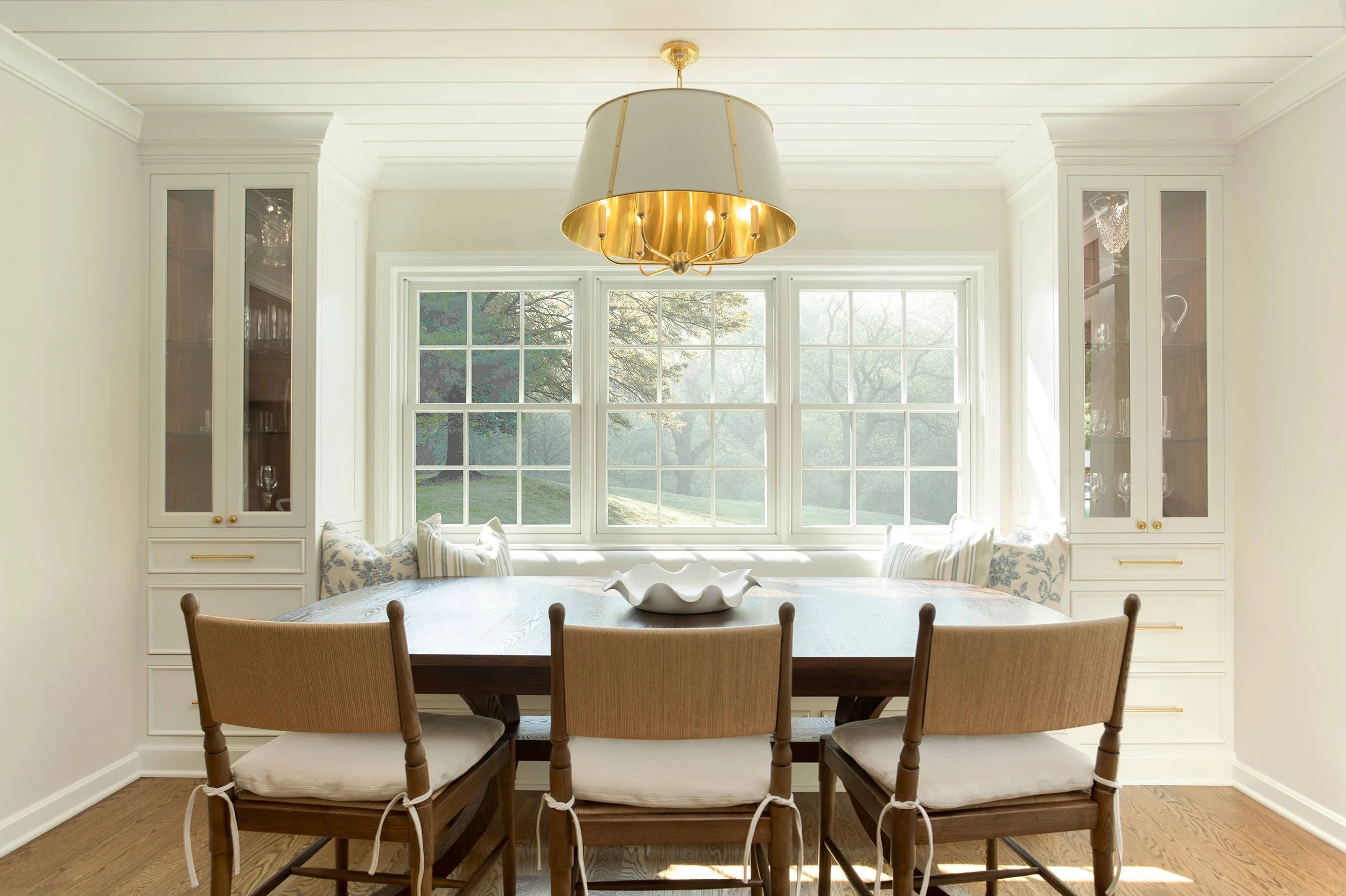
History Retold dining area in Shaker Heights, Ohio with a custom built-in banquette, white cabinetry, wood dining table, and brass lighting.
Article Summary
A well-designed whole home doesn’t happen by furnishing each room separately. At Ducy Design, furnishings are considered alongside the architecture, finishes and function from the beginning. The result is a home where every room feels personal, while still feeling connected to the spaces around it.
You’ve spent months, maybe even years, planning your home. The architecture is exactly right. The millwork has been carefully considered. The floors, tile, and finishes all work together. But there’s still one layer that can make the difference between a beautiful house and a truly finished home: the furnishings.
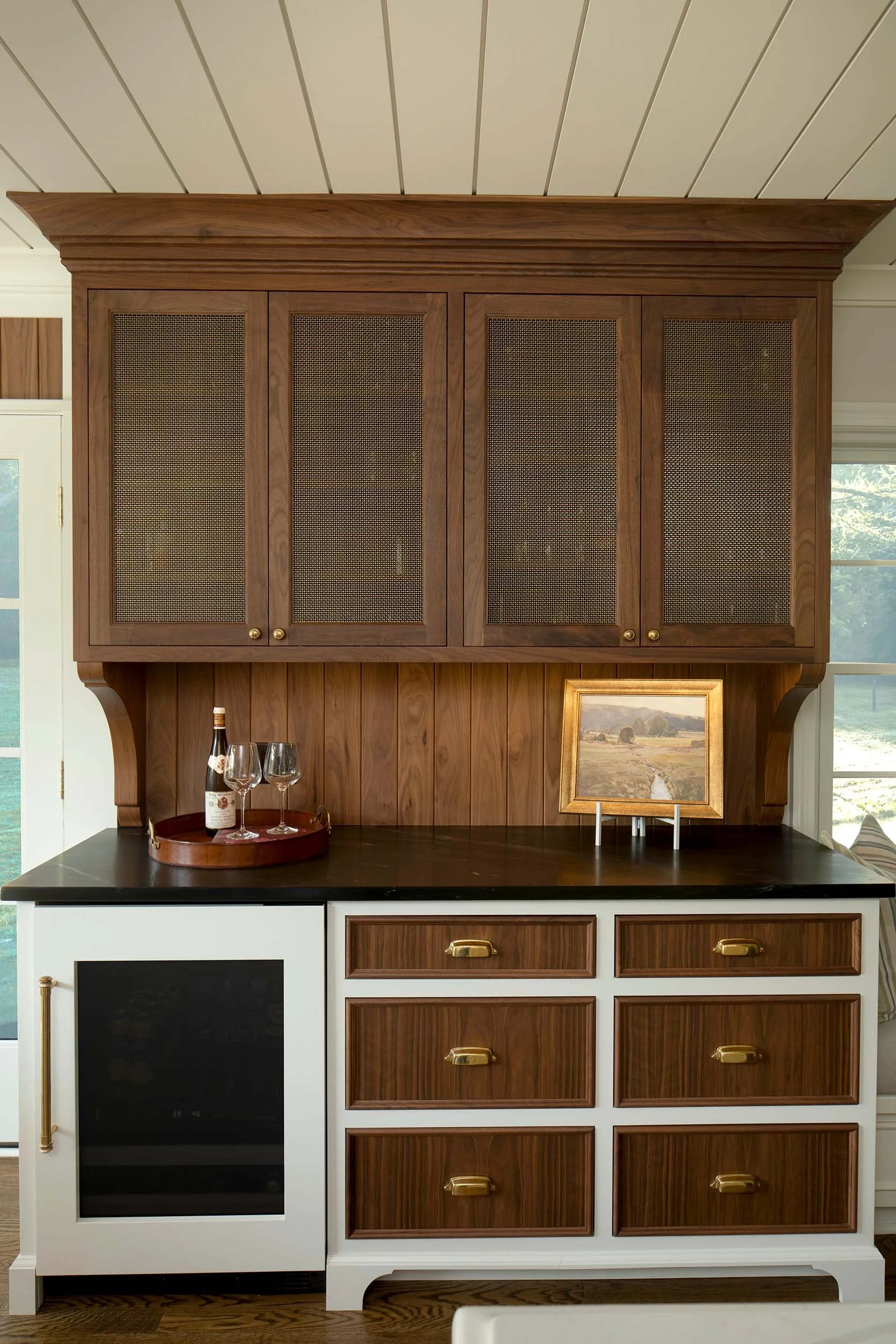
Custom walnut and white kitchen cabinetry with woven cabinet fronts, black countertop, and antique brass hardware
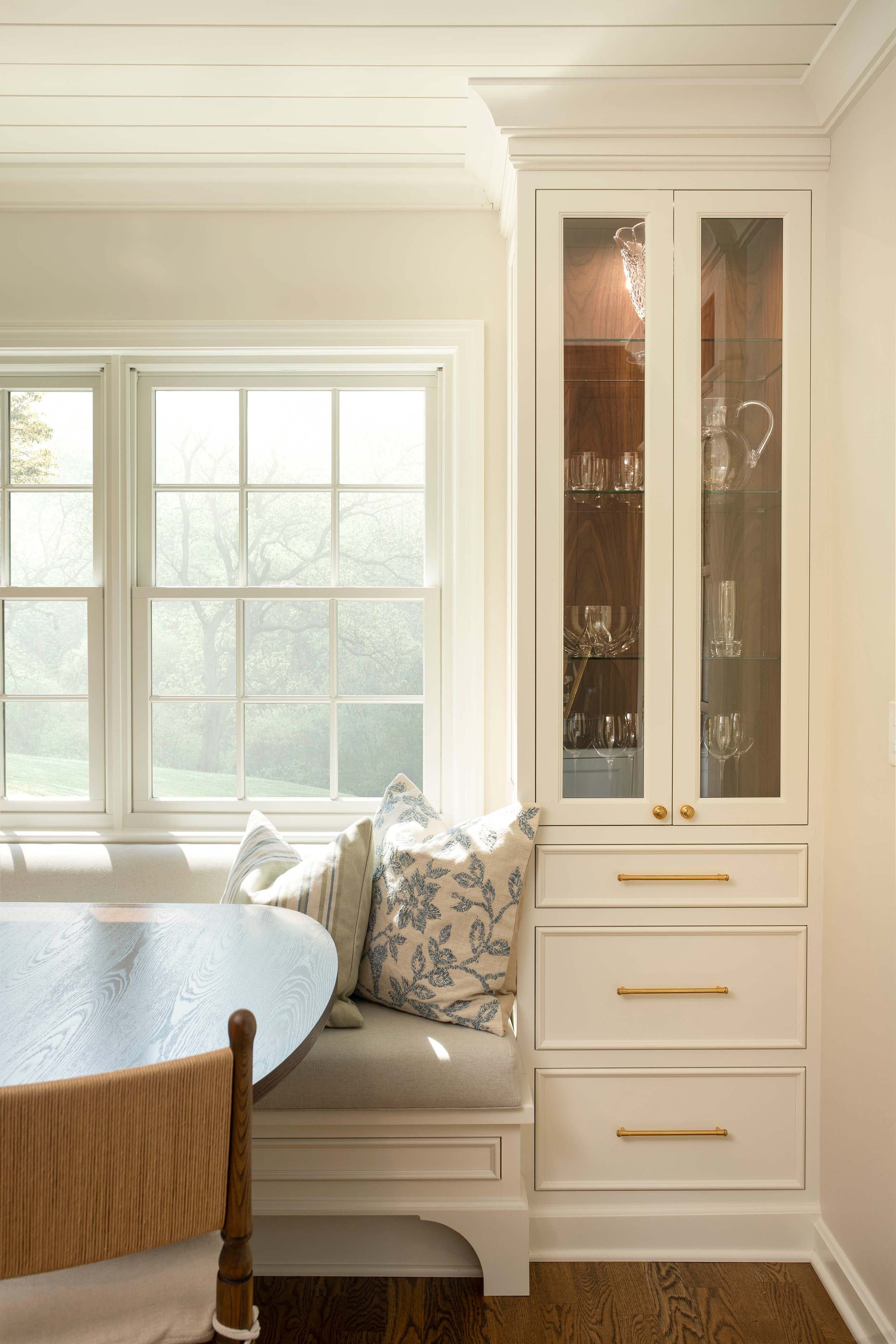
History Retold dining nook in Shaker Heights, Ohio with a custom built-in banquette, glass-front cabinetry, and floral pillows
Bringing the Whole Home Together
Furniture isn’t simply what goes into a room once everything else is done. It influences scale, function, flow, and the way you experience the space every day.
At Ducy Design, whole home interior design means considering furnishings as part of the larger vision from the beginning. “We start with the heart. What does a client want to feel when walking through their space,” says Founder and Principal Designer Kristen Hennie.
From that feeling, every room can have its own personality while still feeling connected to the home as a whole.
Plan the Furnishings Early
One of the biggest mistakes homeowners can make during a renovation or new construction project is waiting until the end to think about furniture.
By then, room dimensions are set, electrical locations have been established, and architectural details are finished. The furniture is left to work around decisions that may not have been made with the finished room in mind.
At Ducy Design, the furnishing plan is developed alongside the interior architectural plans. Furniture floor plans establish the size and placement of key pieces while there’s still time for us to coordinate the details around them.
“Furniture can’t be an afterthought,” Kristen says. “If we know what’s going into a room, we can make smarter decisions about the room itself.”
Dining rooms are a perfect example. If a 72-inch round table is part of the plan, the decorative light fixture can be properly sized and centered over it. But if the homeowner later falls in love with an oval table, that carefully selected fixture may no longer work.
The same considerations apply to custom banquettes, built-ins, seating arrangements, and other elements that affect how a room is designed.
For interior design for new construction, planning these details early can make a significant difference. When architecture and furnishings are developed together, the finished home feels intentional from the start.
Start With the Feeling
Before choosing furniture or finishes, our team starts with the feeling a client wants to have when they walk through the door.
Maybe the home should feel formal and sophisticated. Maybe it should be warm and inviting. Maybe it needs a more relaxed or masculine character. Once that direction is clear, the design language starts to take shape.
Wood tones and metal finishes can be carried throughout the home to create continuity. Flooring can serve as a visual anchor, while furnishings, millwork, and accessories build on those tones and textures.
Our goal isn’t to make every room look the same. It’s to make sure the rooms belong together.
Cohesive Doesn’t Mean Matching
A well-designed home should have some surprises.
A powder room might be a place to have a little fun with a bold color or wallcovering. A study can be darker and moodier. A guest room might introduce a new pattern or material.
Those moments give a home personality. They work because they still relate to the larger design.
That balance is an important part of whole home interior design. Each room can have its own point of view while maintaining a sense of connection as you move through the house.
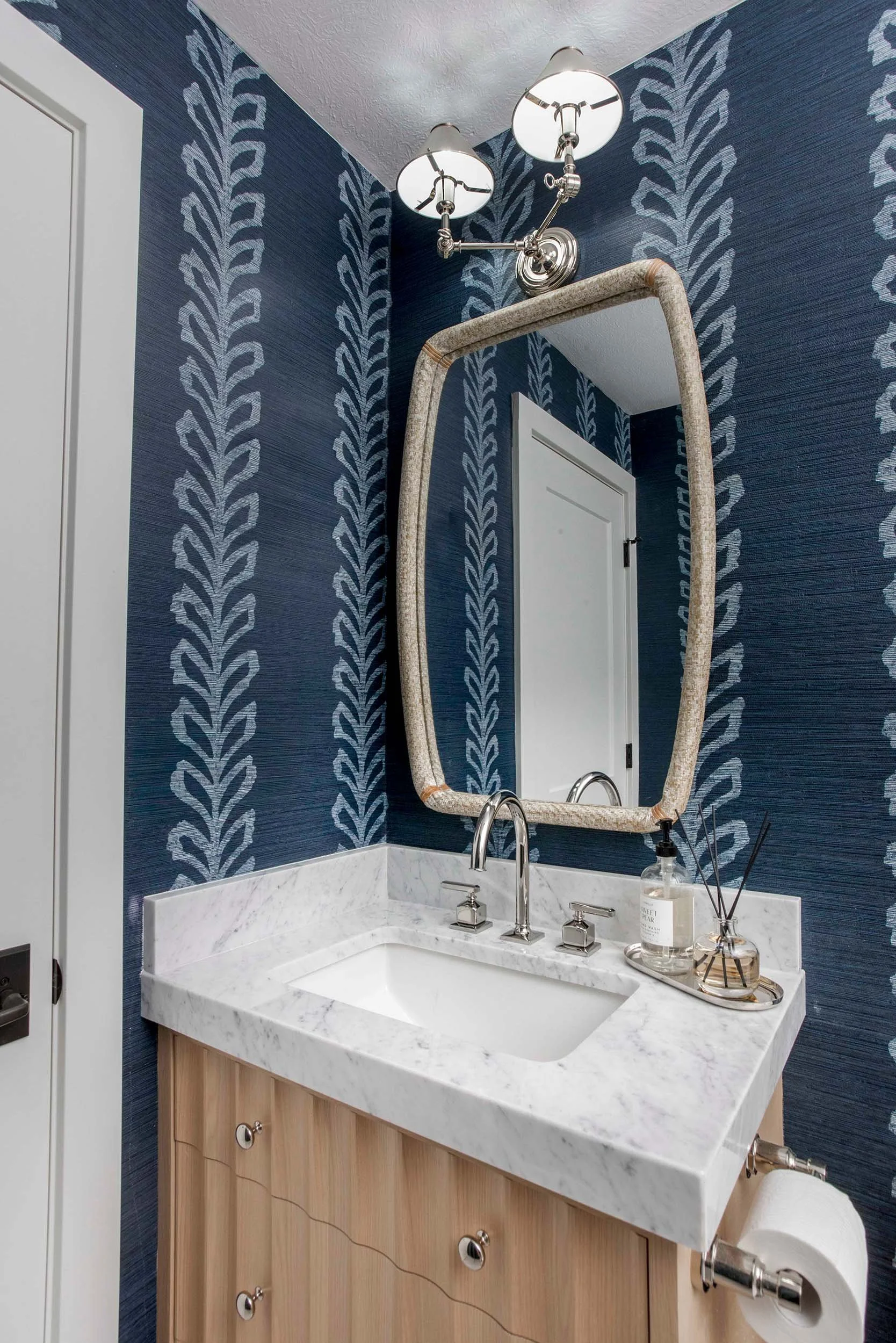
Polished Lakehouse kitchen in Conneaut Lake, Pennsylvania with white oak cabinetry, quartz island, wood plank ceiling, and woven pendant lights.
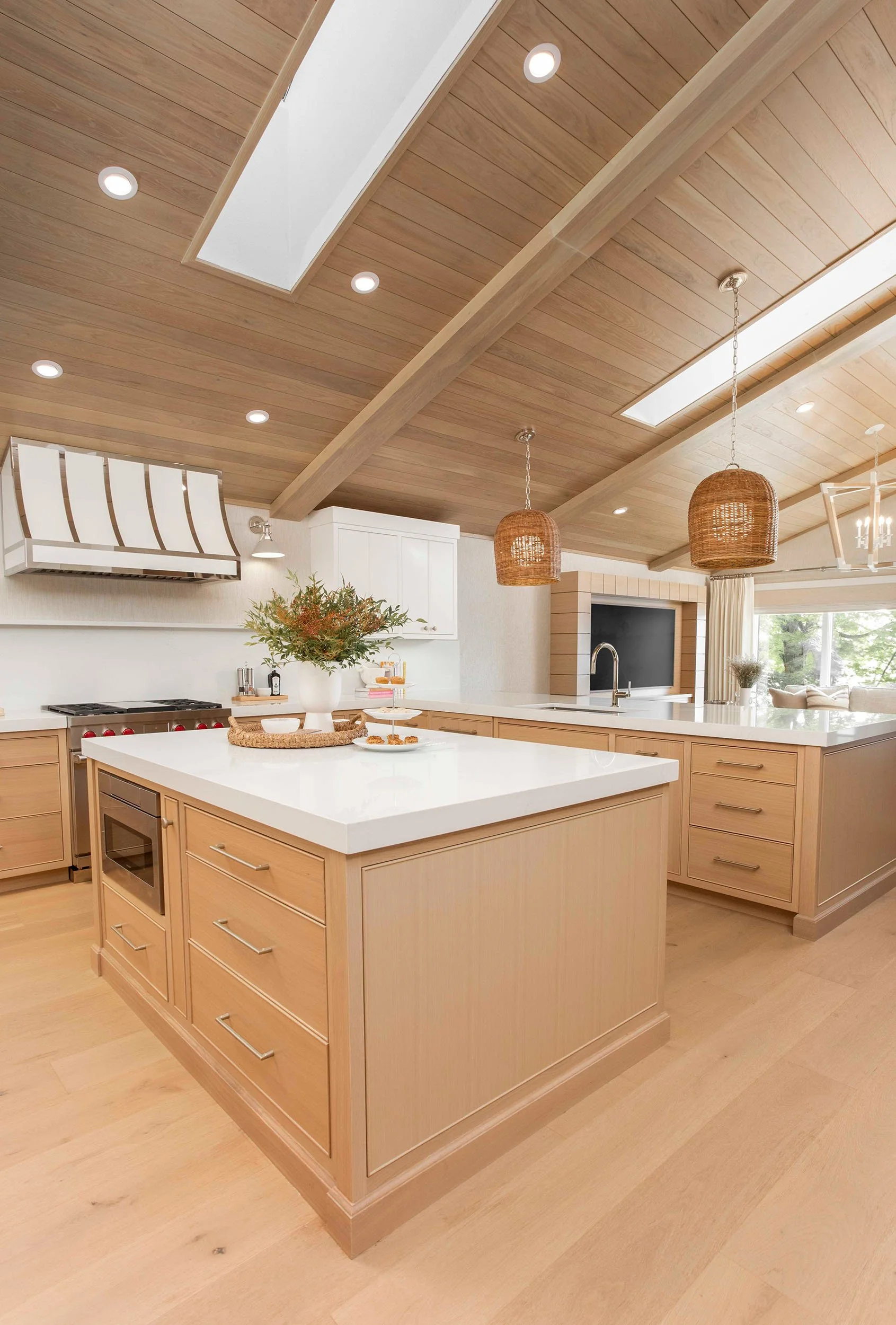
Polished Lakehouse powder room with custom wood vanity, marble countertop, blue botanical wallcovering, and polished nickel fixtures.
Furniture Is Part of the Design
Furniture isn’t simply what fills an empty room after the renovation is complete. Its scale, proportion, and placement can influence the way the entire space works.
And when you’re working with our team, the furniture itself can be far more personal than something you find at a retail showroom.
Ducy Design has direct relationships with more than 100 high-end furniture and accessory vendors, giving clients access to pieces, fabrics and finishes that aren’t typically available to the general public. That opens up a much wider range of possibilities, from custom upholstery and drapery to in-line fabrics, custom textiles and finishes selected specifically for a project.
“Sometimes the difference is in the details,” Kristen says. “We can take a piece that’s already beautiful and make it feel completely personal through the fabric, finish, scale or custom details.”
That’s where custom furniture becomes especially valuable. A piece can be sized specifically for the room, upholstered in a particular pattern or color, finished in a wood tone that works with the rest of the home, or customized in ways that simply aren’t possible with off-the-shelf furniture.
And that’s a big part of what clients are investing in when they choose a full-service design firm like ours. They aren’t just getting help deciding between two sofas. They’re gaining access to a network of vendors, artisans and workrooms, along with professionals who know how to bring all of those options together.
In our Collected Estate project, the sofa is a perfect example of how customization can make a meaningful difference. We tailored the depth and height specifically to our client, creating a piece that feels comfortable and proportioned to the space. The furnishings also create a natural continuation from the kitchen, carrying soft, dusty blue tones into the adjoining spaces for a subtle sense of connection throughout the home.
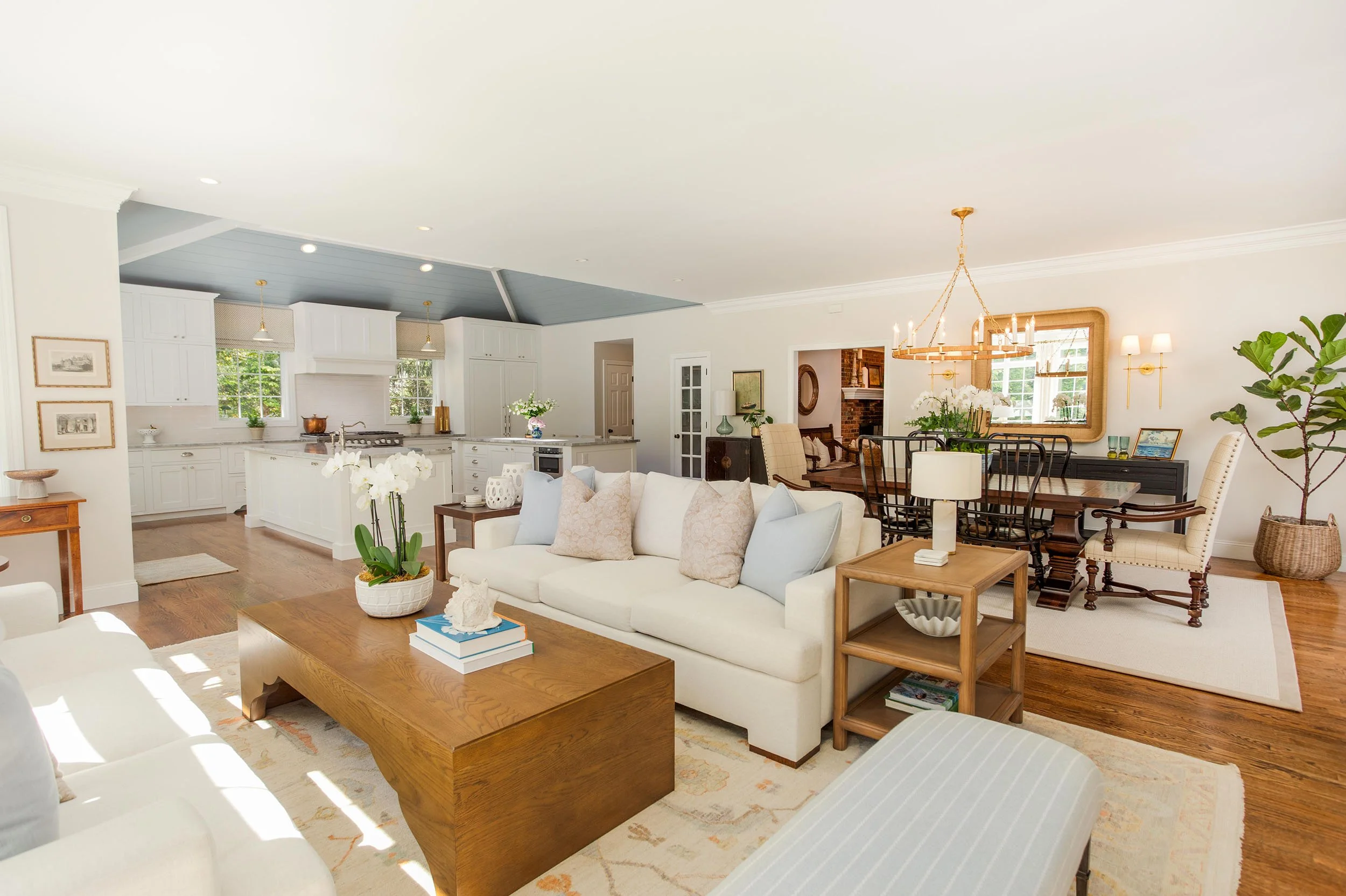
Collected Estate living room in Cleveland, Ohio with custom sofa, soft blue furnishings, and warm wood tones
Why Whole-Home Furnishings Matter
For a high-end home, the furnishing phase is where all of the design decisions begin to come together.
A whole home furnishings plan considers how the rooms work individually and how they relate to one another. It also accounts for the practical details that happen behind the scenes, from coordinating orders and specifications to managing lead times, receiving, and installation.
“We’re looking at the home as a whole,” Kristen says. “Even when each room has its own personality, there needs to be a connection between them. That’s what makes a home feel intentional.”
Our team manages the furnishing process from selection through installation, coordinating with vendors, workrooms and other partners along the way. That means clients don’t have to keep track of dozens of individual orders or figure out how everything comes together at the end.
It’s a very different experience from finishing a renovation and then starting from scratch to furnish the house. The furnishings have already been considered as part of the larger design, so the final pieces reinforce the architecture, finishes, and overall feeling established throughout the project.
And after months of planning and construction, that final installation is the moment when the house really starts to feel like home.
A Look at Unified Design
Our past projects show how different a whole-home approach can look from one client to the next.
In The Modern Traditionalist, the design respects the character of a century-old Dutch Colonial while introducing modern elements suited to contemporary living. Original hardwood floors, varied wood tones, dark metal finishes and tailored furnishings create a natural connection between the home’s traditional architecture and its updated interiors.
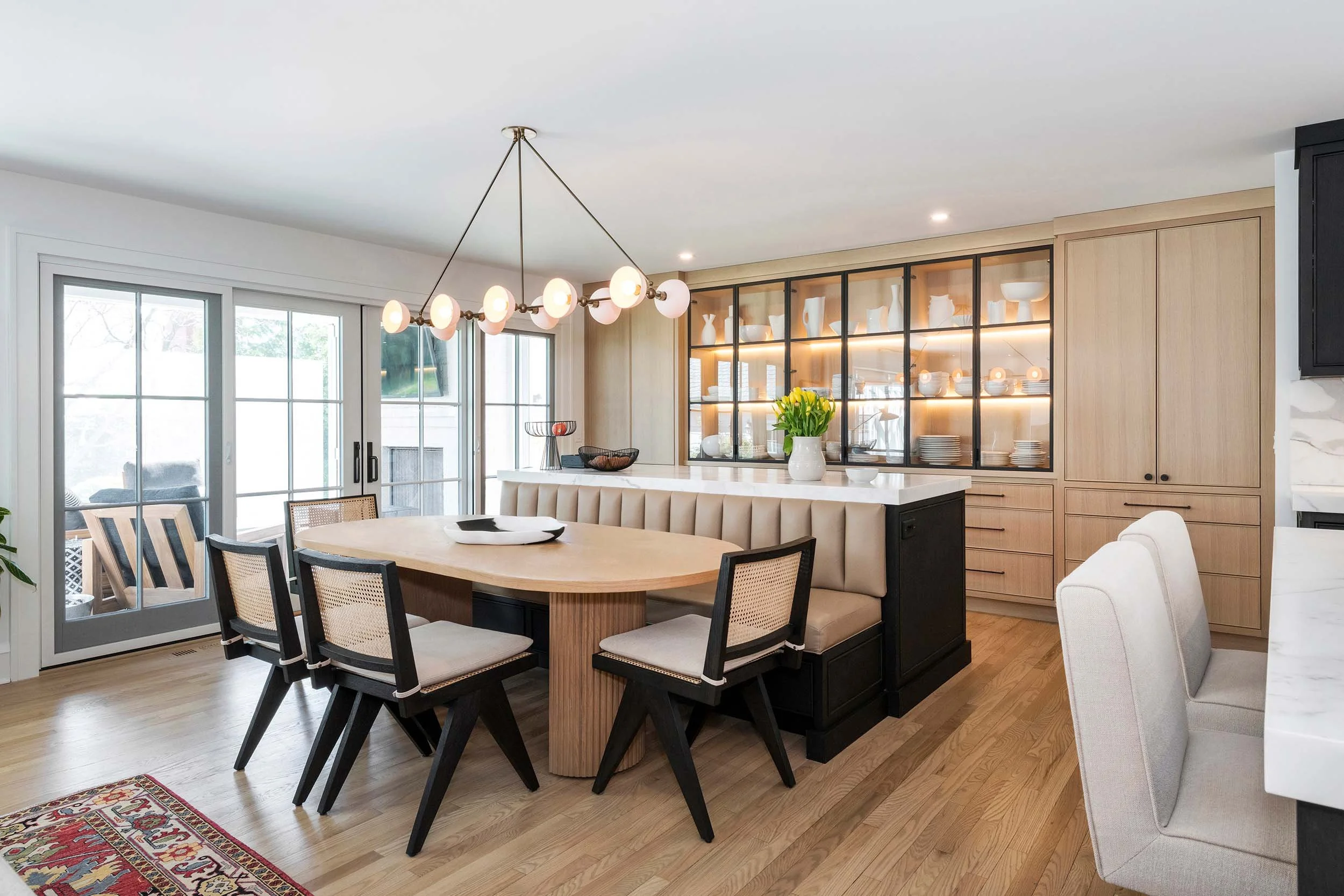
Modern Traditionalist dining area with sculptural banquette island, inset white oak cabinetry, iron-framed glass cabinets, and modern chandelier.
Explore The Modern Traditionalist
In History Retold and Polished Lakehouse, the aesthetic is different, but the same attention to continuity, proportion, and personalization carries throughout the spaces.
Don’t Leave the Finish Line to Chance
A significant investment in a renovation or new build deserves furnishings that complete the vision.
That doesn’t mean every piece needs to be custom or every room needs to make a statement. It means the final layer should support the architecture, reflect the people who live there, and feel intentional throughout the home.
That’s the difference between furnishing a house and completing a home.
For homeowners considering luxury interior design in Cleveland, Ohio, Ducy Design brings architecture, furnishings and everyday living together under one cohesive vision, guiding projects from early planning through final installation.
When you’ve invested in creating an exceptional home, the finish line deserves the same level of thought as everything that came before it.
Frequently Asked Questions
How much does it cost to furnish a whole home?
The cost of furnishing a whole home can vary significantly depending on the project's size, the number of rooms, the quality and customization of furnishings, and the overall design scope. At Ducy Design, we work with each client to understand their investment range and curate furnishings that align with both their aesthetic and the project as a whole.
Explore Ducy Design’s custom furnishings services
Do interior designers help with furniture selection and installation?
Yes. With a full-service interior design firm, furniture selection is just one part of the process. At Ducy Design, our team coordinates furnishings from selection and specifications through ordering, receiving, and final installation. We manage the details behind the scenes so the client can experience the finished space without having to coordinate every individual piece.